
Ask anyone who has actually run an event — a wedding, a college fest, a product launch, a concert — and they’ll tell you the same thing: it never goes exactly as planned. Somewhere between the client meeting in the morning and the guests walking in at night, something always shifts. A vendor is late. A speaker cancels. The rain shows up uninvited. And yet, somehow, the show goes on.
That’s really what event management is about. Not just decorating a stage or booking a venue, but holding together a dozen moving parts at once — planning, communication, budgeting, teamwork, problem-solving — and staying calm when the plan falls apart in front of you.
If you’re thinking about a career in this field, the first real question isn’t “how do I get creative ideas?” It’s “what skills do I actually need to survive event day?” Let’s get into it.
What Skills Are Required for Event Management?
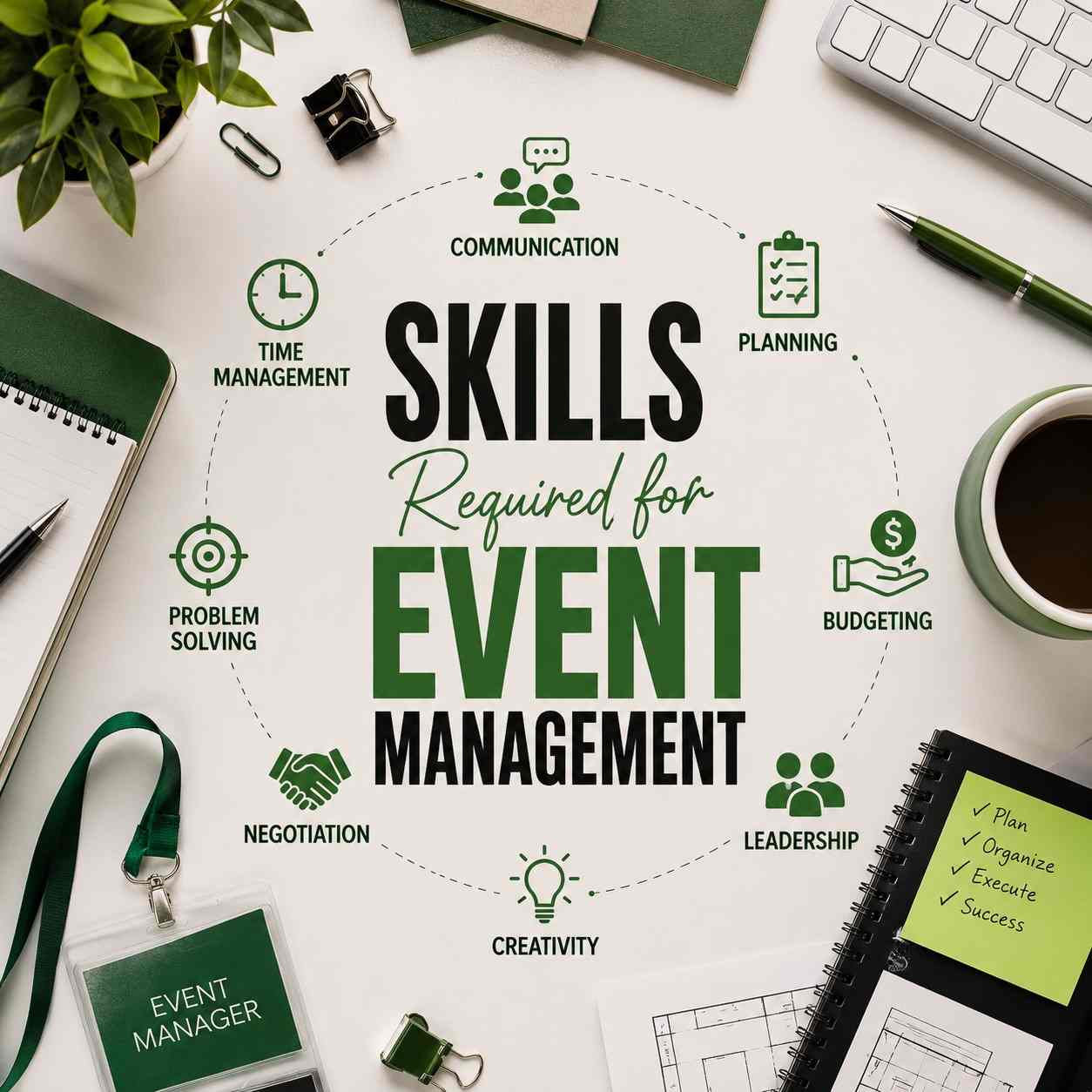
At the core, the skills required for event management are communication, organisation, time management, budgeting, negotiation, creativity, leadership, problem-solving, and adaptability. Together, these take a project from the first client brief all the way to the final execution — and, honestly, most of these skills only really make sense once you’ve seen them in action on the ground.
Here’s what each one actually looks like in practice.
1. Communication and Interpersonal Skills
On any given day, you could be talking to a client, a sponsor, a speaker, a venue manager, a caterer, a lighting technician, and your own team — sometimes all before lunch.
Good communication here isn’t about sounding confident on a call. It’s about listening well enough to understand what a client actually wants (which isn’t always what they say first), giving instructions that don’t need to be repeated three times, and telling people the moment something changes instead of letting them find out too late.
This is also where relationships get built. Clients come back to planners they trust. Vendors go out of their way for coordinators who treat them fairly. In an industry that runs on repeat business and referrals, being someone people want to work with again is worth more than any portfolio.
2. Organisation and Time Management
If there’s one skill that separates a smooth event from a chaotic one, it’s organisation.
A single event can involve venue bookings, guest lists, budgets, contracts, transport, accommodation, catering, run-sheets, stage production, and marketing — all happening at once, with dozens of small deadlines tied to each other. Miss one, and it can knock over three others like dominoes.
Experienced organisers lean on checklists, shared calendars, timelines, and event-management software to keep track of it all, but the real skill is knowing what to prioritise when five things are demanding your attention at the same time.
3. Budgeting and Financial Management
A brilliant idea is only as good as the budget behind it.
Event professionals need to estimate costs realistically, split money across different needs, compare vendor quotes without just picking the cheapest one, track spending as the event progresses, and spot where they can trim costs without the guest experience taking a hit.
This skill matters most when something unexpected comes up — and something always does. Knowing when to adjust the plan, rather than quietly letting small overspends pile into a big problem, is what separates a good budget manager from someone who just fills out a spreadsheet.
4. Negotiation Skills
You’ll spend a surprising amount of time negotiating — with venues, hotels, caterers, production houses, decorators, transport providers, and performers.
Good negotiation isn’t about squeezing the lowest possible price out of everyone. It’s about understanding what a service is actually worth, being upfront about terms, weighing options properly, and reaching a deal that both sides are happy walking away from.
Strong negotiators end up controlling costs and keeping vendor relationships intact — which matters, because you’ll probably be calling that same vendor again for your next event.
5. Creativity and Attention to Detail
An event needs to work, but it also needs to be remembered.
Creativity shapes the theme, the décor, the stage design, the entertainment, and the overall guest journey. But creativity on its own isn’t enough — it has to sit alongside attention to detail. A stunning concept falls flat fast if the registration desk is disorganised, the signage is missing, or the schedule is running 40 minutes late.
The professionals who stand out are the ones who can hold the big vision and the tiny details in their head at the same time.
6. Problem-Solving and Adaptability
No matter how carefully you plan, something will go sideways.
A speaker gets stuck in traffic. The sound system cuts out mid-performance. A supplier doesn’t show up. It starts raining on an outdoor event. A guest has a need nobody anticipated.
This is where problem-solving becomes one of the most valuable skills in event management — not panicking, quickly reading the situation, finding a workable alternative, and communicating it before anyone even realises there was a problem.
Adaptability matters because these calls almost always have to be made on the spot, with people watching, and no time to overthink.
7. Leadership and Team Management
Big events are never a one-person job. They need people across production, hospitality, security, registration, logistics, marketing, and technical operations, all moving in sync.
A good leader knows how to delegate without micromanaging, set clear expectations, keep the team motivated when everyone’s tired by hour ten, and make quick decisions when needed. Just as important — taking responsibility when something goes wrong, instead of pointing at someone else.
If you’re just starting out, you don’t need a big title to build this. Coordinating a college fest, volunteering at an event, or leading a small team project all count as real leadership experience.
8. Technology and Digital Skills
Events today run on more tech than people expect. Registration platforms, ticketing apps, event apps, hybrid and virtual event tools, project-management software, social media promotion, and post-event data reports have all become part of the job.
You don’t need to be an expert in every tool out there. But being someone who can pick up new software quickly — and use data to actually improve the next event, not just report on the last one — makes you far more useful to a team than someone who avoids anything digital.
What Skills Does an Event Coordinator Need?
People often use “event manager” and “event coordinator” interchangeably, but the roles aren’t quite the same. A manager usually owns the big picture — strategy, client relationships, the overall budget. A coordinator is the one making sure the individual pieces of that plan actually happen on the ground, on time.
The event coordinator skills that matter most include organisation, communication, scheduling, attention to detail, teamwork, timely follow-up, vendor coordination, and problem-solving. A coordinator takes a manager’s plan and breaks it into specific, trackable tasks — confirming the caterer arrives by 9 AM, making sure the AV team has tested the mics, following up with a vendor who hasn’t replied since yesterday.
It’s a role built on follow-through more than vision, and it’s often where people entering the industry start before moving into full event management.
How Can You Develop These Skills?
You don’t need to master all of this before you get your first opportunity — nobody does. Most of these skills are built through repetition, not theory.
Start small: help organise a college event, a cultural fest, or a community gathering. Sit in on a vendor negotiation, even if you’re not the one talking. Build a checklist and a timeline for something, even something minor. Put yourself in situations where you have to talk to different kinds of people under time pressure — that’s where communication actually improves.
Formal courses and certifications can give you a solid foundation and useful industry credentials, but they can’t replace the version of learning that only happens when something goes wrong in front of you and you have to fix it. Networking with people already in the field helps too — a lot of early opportunities in this industry come through word of mouth, not job portals.
Final Thoughts
The best event professionals aren’t necessarily the loudest or the most naturally creative people in the room. They’re the ones who can organise the details, read people well, manage resources sensibly, communicate clearly under pressure, and stay dependable when everything feels like it’s about to fall apart.
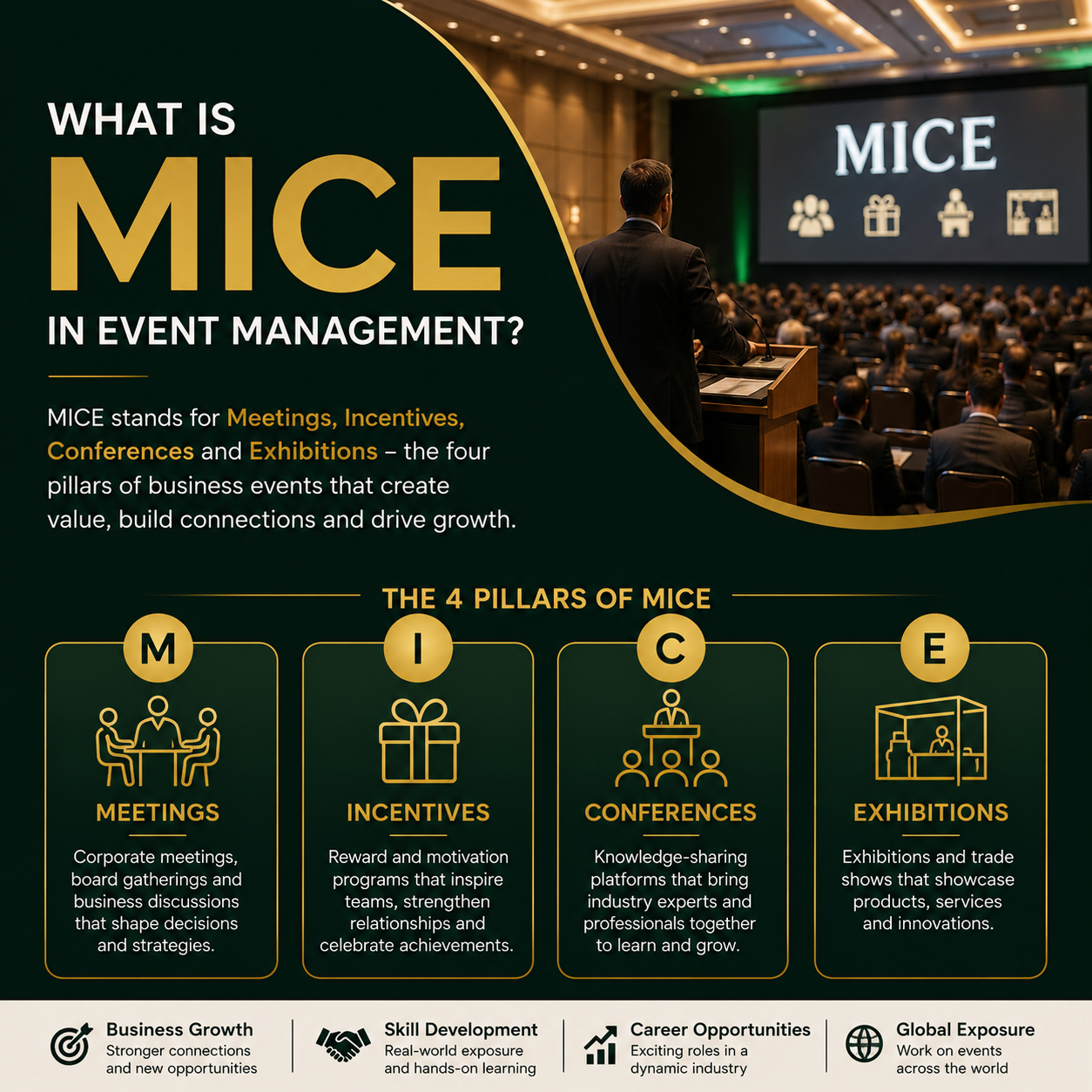
If you’re serious about this field, don’t try to build all these skills at once — pick one, get comfortable with it, then move to the next. With the right mix of training and hands-on experience, a career in event management can open doors across corporate events, weddings, exhibitions, conferences, entertainment, and hospitality.
It’s demanding work. But for people who genuinely enjoy working with others, solving problems on the fly, and turning an idea into a real, living experience — it’s also one of the more rewarding careers out there.