
Event Management Career in India: Is It the Right Move for You?
Every wedding you have attended, every product launch that made headlines, every concert people talked about for days, someone planned all of it down to the last chair. That someone is an event manager. If you have ever felt a quiet pull towards organising, creating and pulling off something big in front of a live audience, this field might already be calling you.
An event management career is no longer a side hustle for “creative types”. It is a proper profession with job titles, growth paths and real money, and it keeps hiring. If you are searching for how to become an event manager, you are not late to the party. You are right on time.
Why This Industry Keeps Growing
Start with the money. Mordor Intelligence valued the India event and exhibition market at USD 5.69 billion in 2025, and expects it to reach USD 9.04 billion by 2031. That is steady, long-term growth, not a one-season spike. giiresearch
Then there are weddings, which behave like an industry of their own. India holds 8 to 10 million weddings every year, making it the largest wedding market in the world, with spending estimated at nearly ₹10 lakh crore. EEMA’s president says weddings make up around 32% of the entire events business in India. A Commerce Ministry report cited by Outlook Business says the wedding industry gives jobs to about 1 crore people, including planners, decorators and caterers. Weddings now a $130 billion industry; expenses only seen going up disproportionately in most cases +2
There is also plenty of room left. India has 18% of the world’s population but only 2 to 4% of the global experience economy, which EEMA calls its biggest growth opportunity. So when people ask about the event management scope in India, the short answer is that the industry is still far from its ceiling. Brands want activations, companies want conferences, families want destination weddings, and cities keep adding festivals and exhibitions. medianews4u
What Does an Event Manager Actually Do?
Before courses and job titles, understand the job. An event manager is part planner, part negotiator, part problem-solver, and on the day of the event, part therapist. You are the vendor wrangler and the budget balancer. You are also the person who handles the chaos: the caterer who is late, the mic that dies, the client who changes the plan an hour before guests arrive. Through all of it, guests should see only a smooth, beautiful evening.
It is demanding and unpredictable. For the right kind of person, it is also deeply satisfying.
The Honest Part: Is It a Good Fit for You?
So, is event management a good career in India? For most people who enjoy people and problem-solving, yes. But it is better to know the downsides before you commit.
Hours are long, especially in the week of an event. Weekends and festivals are your busiest days, not your days off. Income can swing with the season, and a lot of the work still runs on relationships rather than formal contracts. If you need a fixed 10-to-6 routine, this will frustrate you.
In return you get variety, travel, constant new people and a visible result of your work. Few jobs let you stand in a hall at night and say, “I built this.”
Jobs You Can Aim For
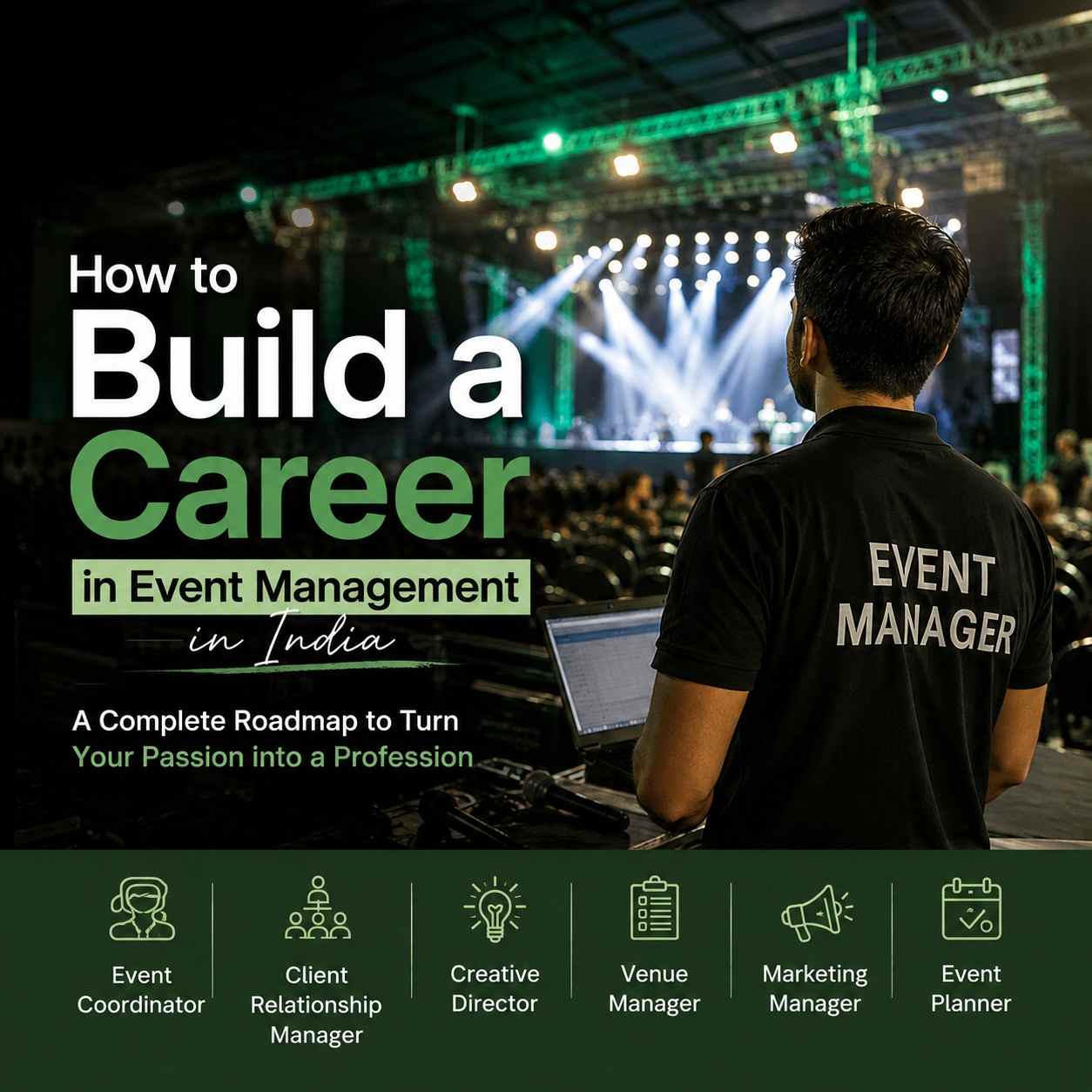
Event management has more roles than most people expect:
- Event coordinator: handles logistics, vendor follow-ups and delivery timelines. Most freshers start here, and Indeed lists the average pay at about ₹2.9 lakh a year.
- Event planner: designs how the event looks and flows, working from the client’s ideas. Indeed lists about ₹4.9 lakh.
- Event organiser: focuses on cost, timing and client expectations. About ₹4.6 lakh.
- Event producer: oversees everything, including budget, equipment, venue checks and staff. About ₹4.7 lakh.
- Event marketing specialist: promotes the event and builds brand buzz. About ₹4.8 lakh.
- Specialised paths: wedding planner, exhibition manager, brand activation lead, sponsorship manager or production manager.
These are national averages and will differ by city and company.
Starting After 12th
You do not have to wait for graduation. Event management after 12th is one of the most common and sensible entry points. You can join a certificate or diploma programme in any stream, whether science, commerce or arts. What counts is your interest in planning, your comfort with people and your ability to stay calm when things go sideways.
Diploma courses usually run from a few months to a year and focus on the practical side: vendor management, budgeting, event design, digital promotion and on-ground execution through live projects. If you prefer a longer route, a bachelor’s degree in marketing, business administration or hospitality also works well, especially if you do internships alongside it. A degree is not mandatory here, but it can help you land your first role faster.
Getting In Without a Related Degree
Plenty of people ask how to get into event management when their degree is in engineering, commerce or even medicine. This industry cares far less about your degree than about what you have actually run. Volunteer for your college fest. Assist a local event company for free on your first few gigs. Organise a family function from start to finish and document it with photos, a budget sheet and vendor details. That small portfolio can be your entry ticket.
A short professional course then adds structure and credibility. Together, the course and the portfolio make a resume recruiters actually notice.
Skills That Matter
You need these on day one and they grow with every event:
- Organisation: juggling dozens of moving parts and knowing which one matters most right now.
- Communication: listening to clients properly and coordinating with venues, caterers and crew.
- Negotiation and budgeting: getting good rates without losing quality, and keeping spending under control.
- Calm under pressure: the skill nobody lists, but every employer tests.
- Tech comfort: project management tools, spreadsheets, design apps and social media.
How to Join an Event Management Company
Once you have some training or hands-on experience, the next step is how to join an event management company. Apply for internships or entry-level coordinator roles. Established companies in Delhi, Mumbai and Bangalore often hire freshers as trainees and let them grow into planners within a year or two.
Go to industry meetups and follow event companies on Instagram and LinkedIn, because a lot of hiring starts with a direct message or a story. And never underestimate walking into a local event firm with your portfolio and asking for a trial project. Plenty of careers have started exactly that way.
Where the Career Can Go
Event management as a career rarely stays flat. Most people begin as coordinators or assistants, move into a vertical such as weddings, corporate events or exhibitions, and then become senior managers or start their own company. Starting your own firm is realistic here because the entry cost is low compared to many businesses, and the skills you pick up (vendor negotiation, client handling, budgeting, crisis management) transfer to every kind of event. That is what makes a career in event management so flexible and long-lasting.
Event Manager Salary in India
Let’s talk numbers, since that is what everyone wants to know. The event manager salary in India depends a lot on city, company size and the type of events.
- Freshers: Payscale puts the early-career average for an event manager in New Delhi at about ₹3.25 lakh. For Delhi, it lists about ₹3.6 lakh. A fresher range of ₹2.5 to ₹4 lakh a year is realistic. payscalepayscale
- Mid-level: The overall average for event managers in New Delhi is about ₹5.1 lakh. Mid-career professionals in New Delhi average around ₹9 lakh. payscalepayscale
- Events executives: Glassdoor shows an average of about ₹4.9 lakh, with most people earning between ₹3.7 and ₹8 lakh. glassdoor
- Senior and business owners: earnings can go well beyond these figures, especially in wedding and festive seasons when work and income multiply.
These are averages from salary sites, not guarantees, so treat them as a guide rather than a promise.
Final Word
There’s no single “right” way in. Some people start with a diploma, others learn entirely on the job. What works every time is getting your hands dirty early and staying visible. If you’re serious, start with a practical event management course that puts you on live events from day one, not one that only hands you a textbook.