
Anyone exploring a career in event management, hospitality, or tourism eventually runs into this term — MICE. Course brochures, job listings, hotel revenue reports, industry articles, it’s everywhere. And yet ask most people what is MICE, and you’ll get a blank stare or a half-answer. So let’s actually sort this out.
What Is MICE?
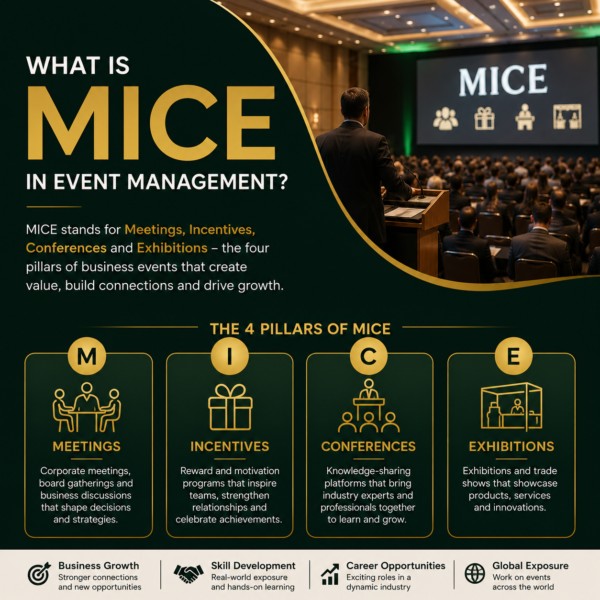
MICE stands for Meetings, Incentives, Conferences, and Exhibitions. It’s the part of the tourism and hospitality world that runs on business travel — not weddings, not family holidays, not someone’s birthday getaway. If a company is sending people somewhere to close a deal, train a team, reward a top performer, or show off a new product, that’s MICE.
This is really what separates it from regular tourism. A leisure traveller books a trip because they want to go somewhere. A MICE traveller — a delegate, an exhibitor, a salesperson who hit target and won a company trip — is there because the office sent them, and somebody’s tracking whether that trip was worth the spend. That’s also exactly why hotels and tourism boards chase MICE business so hard: it pays well and, unlike a random tourist season, a lot of it is booked months in advance.
And the scale varies wildly. One day it’s a 10-person boardroom meeting, the next it’s an exhibition with five thousand delegates walking through. That range is what keeps this field interesting to work in.
MICE Stands For — Breaking It Down Letter by Letter
Split the acronym into its four parts and the whole thing gets a lot easier to remember.
M – Meetings. The smallest, most frequent kind of business gathering — board meetings, sales reviews, leadership huddles, client presentations. Could be two hours, could stretch across a couple of days. Either way, the point is always decision-making or information-sharing inside one company.
I – Incentives. These are the reward trips companies plan for employees, dealers, or channel partners who’ve hit their numbers. Instead of writing a bonus cheque, a lot of businesses would rather send their best people somewhere memorable — a resort weekend in Goa, a few days in Bangkok. A shared experience tends to build loyalty in a way a cash bonus just doesn’t.
C – Conferences. Think of these as meetings that outgrew the boardroom. Keynotes, panels, breakout sessions, networking breaks over coffee — conferences bring an entire industry together, sometimes for several days, with attendee counts running into the thousands.
E – Exhibitions. Also called trade shows. Companies get a stall or booth to show their product directly to buyers, distributors, and investors. Delhi’s Pragati Maidan is basically built for this — it exists almost entirely to host large exhibitions.
Put all four together and that’s the MICE full form covered — meetings, incentives, conferences, exhibitions. You’ll also come across “meetings industry” or “events industry” as newer, broader terms for the same space, though MICE is still what most people in India actually say.
How MICE Event Management Actually Works
Most of the real work happens long before anyone walks into the venue. It usually starts with understanding what the client actually wants and who they’re trying to reach, then moves into budgeting, shortlisting venues, sorting out vendors, arranging travel and stay, and building out a proper itinerary.
Closer to the event date, attention shifts to registration, branding, stage and AV setup, food and beverage, and transport. On the day itself, the job basically becomes air-traffic control — speakers ready on time, sessions running to schedule, and a plan B for whatever inevitably goes sideways, because something always does. This field rewards people who don’t panic and actually enjoy fixing problems in real time.
Why MICE Matters for Hotels and Tourism
This is usually the bit that gets skipped when people explain what MICE means, but it matters a lot. For a hotel with meeting space, or one sitting near a convention centre, MICE isn’t a side business — it can be one of the biggest chunks of annual revenue, since a single conference or exhibition can fill up hundreds of rooms in one shot.
MICE guests also tend to spend more per head than a regular leisure guest. Banquet packages, F&B, AV rentals, add-on services — it all adds up in a way a normal holiday booking never does. And because conferences and trade shows tend to repeat every year around the same season, hotels can actually plan a budget around MICE bookings instead of just hoping the leisure season shows up strong. That’s exactly why tourism boards and hotel chains treat MICE as its own category worth chasing, rather than something that just happens to come their way.
Why MICE Is Growing So Fast in India
India’s MICE sector has picked up real pace lately, and this isn’t just marketing spin. During India’s G20 presidency, over 200 meetings were held across 56 cities — that alone put the country’s event infrastructure on the global map. On the back of that, the Ministry of Tourism launched a National Strategy for the MICE Industry, naming cities like Varanasi, Khajuraho, and Kochi as MICE-ready destinations that mix modern facilities with cultural draw.
Add rising corporate spending on conferences and incentive travel to that government push, and you get one of the fastest-growing corners of the tourism and hospitality industry — and one that’s genuinely hiring right now.
Career Scope in MICE
Event management and tourism graduates aren’t stuck with one job title here, and honestly, the kind of work you’ll do depends a lot on where you sit:
- At a hotel — the sales and banquet teams handle inquiries, put together proposals, and run the on-ground execution when a meeting or conference is hosted on-site.
- At a venue or convention centre — account and event managers look after a set of clients, bring in vendors, and oversee how an exhibition or large conference actually plays out.
- At a company or agency — in-house events teams or MICE Event Coordinators plan everything from a sales kickoff to a dealer incentive trip, usually juggling vendors and venues directly.
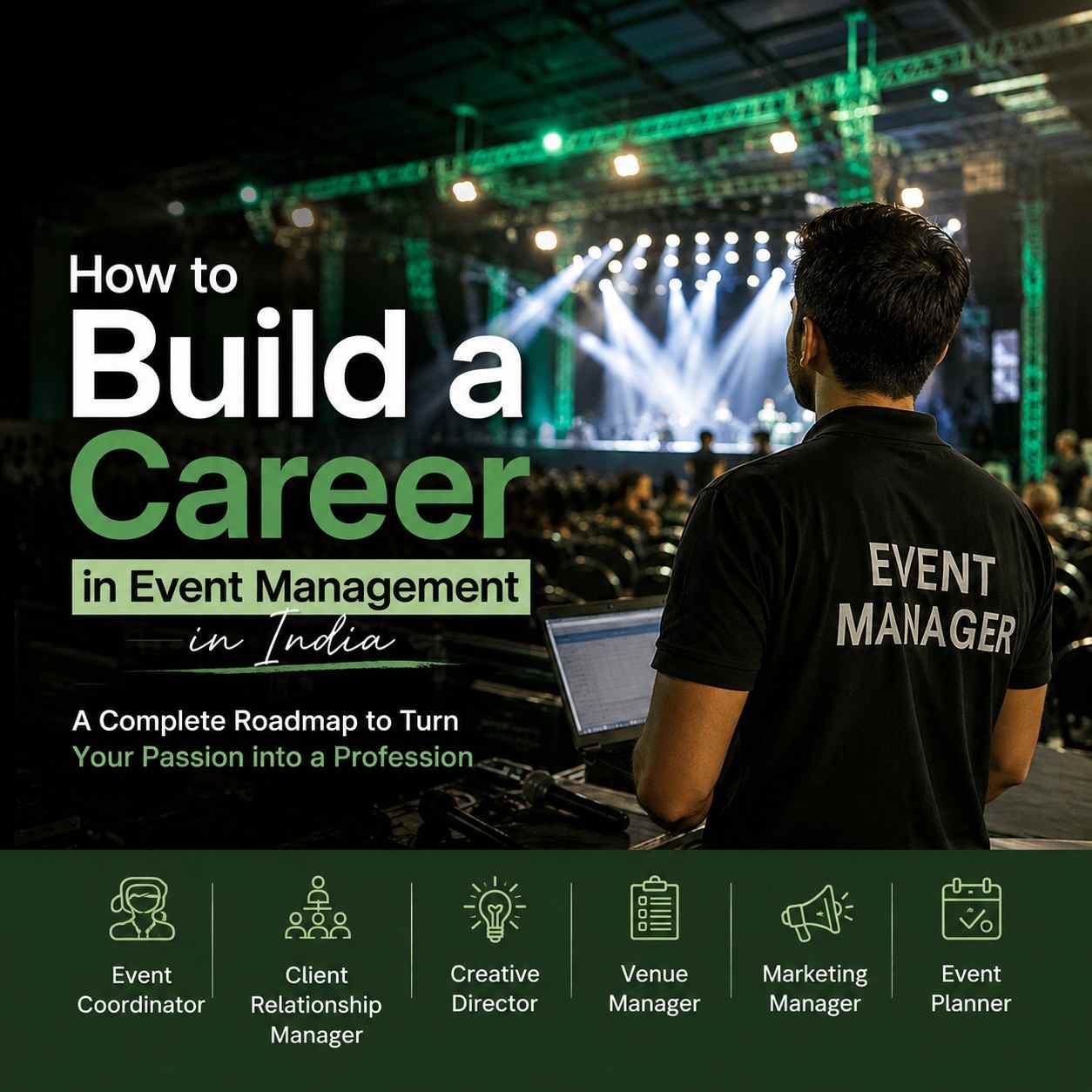
Common titles floating around include MICE Event Coordinator, Conference Coordinator, Exhibition Manager, Client Servicing Executive, Event Operations Executive, and Corporate Event Manager.
What actually makes this career fun is the variety — one month you’re planning a tech conference, the next you’re managing an incentive trip for a pharma company’s sales team. That kind of exposure to different clients, cities, and sometimes countries just isn’t something a regular desk job gives you.
The skills that matter most are communication, budgeting, vendor negotiation, and staying organised when ten things are on fire at once. A structured course helps you get there faster — you learn logistics, client handling, and on-ground execution properly instead of figuring it all out through mistakes on the job.
Final Thoughts
So next time someone asks what MICE stands for, you’ve got a clean answer ready — Meetings, Incentives, Conferences, and Exhibitions, four categories quietly powering a massive chunk of the tourism and business world. With India pushing hard to become a global MICE destination, this is a genuinely good time to build a career in this space.