
Every company throws an event sooner or later — a product launch, an annual conference, a team outing, an award night, a client dinner. And every time, someone ends up realising the same thing: this is a lot more work than it looks. Booking a hall and sending out invites is the easy part. Corporate event management is everything that happens before, during, and after that — and most of it is invisible to the people attending.
Here’s the thing nobody tells you upfront: the events that actually work don’t start with a venue. They start with a question — what are we even trying to achieve here? Once that’s answered honestly, the rest of the planning gets a lot less confusing.
So What Does Corporate Event Management Really Mean?
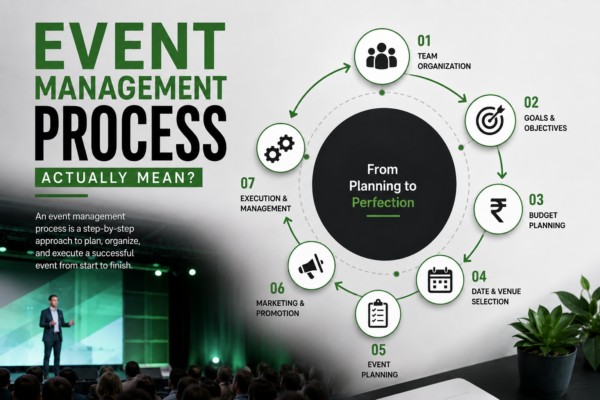
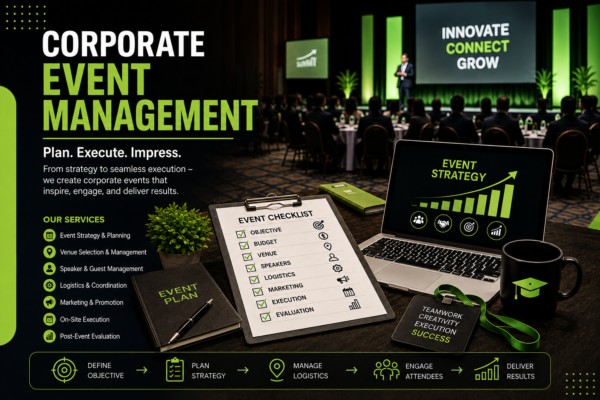
In simple terms, it’s the whole process of taking an event from an idea to something people actually walk into and experience. Concept, budget, vendors, guest list, tech setup, on-ground coordination — all of it falls under this umbrella.
But ticking boxes off a checklist doesn’t automatically make an event good. A launch event needs to build excitement. An employee event needs to make people feel seen. A client event needs to build trust. Same word — “event” — completely different job to do each time.
Why You Can’t Wing Event Planning for Corporate Events
The most common mistake? Treating event planning for corporate events as something you sort out two weeks before the date. That never ends well, because there are too many moving parts that depend on each other — budget decides the venue, venue decides the format, format decides what vendors you even need.
Start with the objective. Then work backwards: budget, audience, location, schedule, branding, food, entertainment, tech. In that order, ideally.
Budget deserves more attention than it usually gets. It’s tempting to spend on things that look flashy in photos, but the smarter move is putting money where attendees will actually notice — comfortable seating, good sound, food that doesn’t run out, smooth registration. Venue matters just as much — not just how it looks, but whether it has the capacity, parking, accessibility, and tech infrastructure the event actually needs.
Getting the Corporate Event Strategy Right
A good corporate event strategy always comes back to one question: why is this event happening at all?
If the answer is networking, don’t stuff the agenda with back-to-back presentations — leave room for actual conversation. If it’s employee recognition, don’t let the “thank you” moment feel like a formality squeezed between two speeches — give it space to mean something.
Knowing your audience changes everything too. A room full of industry professionals expects a different tone than a casual employee retreat. What works for one will fall flat for the other.
The Real Steps Behind Event Management for Corporate Events
Strip away the jargon and event management for corporate events usually comes down to a handful of stages:
1. Nail down the objective first. Everything else depends on this. Without it, you’re just planning “an event,” not the right event.
2. Know who’s showing up. Employees, clients, investors, partners — they all show up with different expectations, even for the same kind of event.
3. Set a realistic budget. Split it across venue, food, production, décor, entertainment, marketing, transport — and always leave a buffer for the stuff you didn’t see coming.
4. Pick a venue that works, not just one that looks good. Location, capacity, parking, accessibility, tech support — check all of it before signing anything.
5. Design the full experience, not just the logistics. Registration, stage setup, lighting, sound, networking breaks, branding — these all need to feel like one connected experience, not separate tasks handled by different people.
6. Have a backup plan. Speakers cancel. Equipment fails. Vendors run late. The events that recover smoothly are the ones that had a plan B ready before anything went wrong.
Making the Event Something People Actually Remember
Nobody remembers a schedule. They remember how something felt. That’s where a bit of creativity goes a long way — live polls, open Q&As, hands-on demos, small networking activities instead of one long stretch of speeches.
Technology helps too, but only when it’s used with a purpose — digital check-ins, event apps, live feedback screens, hybrid options for people who can’t make it in person. None of this needs to be flashy. It just needs to make things smoother for the person attending.
And you don’t need constant entertainment to keep an event interesting. Every activity should earn its place on the agenda — if it doesn’t add anything, cut it.
Why Companies Bring in Professional Help
Running an event in-house sounds like it should save money, but it often means employees juggling event tasks on top of their actual jobs — and that’s usually when things start slipping through the cracks.
This is where professional corporate event managment teams earn their keep. They’ve dealt with vendor delays before, they know which small problems turn into big ones if ignored, and they can make quick calls when something changes last minute — because it usually does.
Their real value isn’t just organising things — it’s knowing how every piece of an event connects to the next, and adjusting fast when one piece shifts.
How Do You Know If the Event Actually Worked?
An event isn’t a success just because nothing went wrong on the day. The real test is what happened because of it.
Depending on what the event was for, that could mean turnout, feedback scores, leads generated, client conversations that turned into deals, how engaged employees seemed, or even how the event performed on social media afterward. This is the data that makes the next corporate event strategy sharper than the last one.
Final Thoughts
A good event isn’t built on a big budget or a fancy venue — it’s built on a clear purpose and attention to how people actually experience it, from the moment they walk in to the moment they leave. That’s what separates a forgettable event from one people are still talking about weeks later.
Whether it’s a small employee get-together or a large industry conference, thoughtful event planning for corporate events turns a routine business occasion into something that actually builds relationships and moves the business forward. At the end of the day, real event management for corporate events isn’t about going bigger — it’s about making sure every part of the event is working toward something that matters.