
If you’re the person your friends always ask to plan the birthday party, the office farewell, or the family function — and you actually enjoy it instead of dreading it — you’ve probably wondered whether that skill could turn into something bigger. The truth is, a lot of people running successful event companies today started exactly where you are: no big office, no huge team, just an idea and a willingness to figure things out as they went.
Starting an event management business isn’t about having a fancy degree or a stack of certificates. It’s about being organized, being good with people, and being okay with a bit of chaos on the day of the event (because there’s always a little chaos, no matter how much you plan). This guide walks you through it step by step, in plain language, without the jargon.
A lot of people search online for how to start event planning business and get overwhelmed by generic checklists that don’t really explain the “why” behind each step. So instead of just throwing a list at you, we’ll walk through this the way you’d actually experience it — one decision at a time.
Why This Field Is Worth Getting Into
Weddings, corporate conferences, product launches, birthday parties, college fests, exhibitions — every single one of these needs someone behind the scenes making sure things run smoothly. And that demand isn’t slowing down. If anything, more companies and families are outsourcing this work because they simply don’t have the time or the patience to do it themselves.
The best part? You don’t need a huge investment to get started. You need skills, a plan, and the courage to take your first booking even when you’re a little nervous about it.
Step 1: Get Clear on What You Actually Want to Do
“Event management” is a huge umbrella term. Under it, you’ve got weddings, corporate events, birthday parties, concerts, exhibitions, product launches, and more. Trying to do all of it at once, especially in the beginning, usually backfires. You end up spreading yourself thin and never really becoming known for anything.
Pick one or two areas to start with. Maybe you love weddings because of the emotion and detail involved. Maybe corporate events excite you more because of the structure and repeat business they offer. Whatever it is, get specific. When someone asks “what do you do,” your answer should be sharp and clear, not vague.
Step 2: Write Down an Actual Event Management Business Plan
A lot of people skip this step because it sounds boring, but this is honestly where most of the real thinking happens. You don’t need a 40-page document written for investors. You need something practical that you’ll actually refer back to.
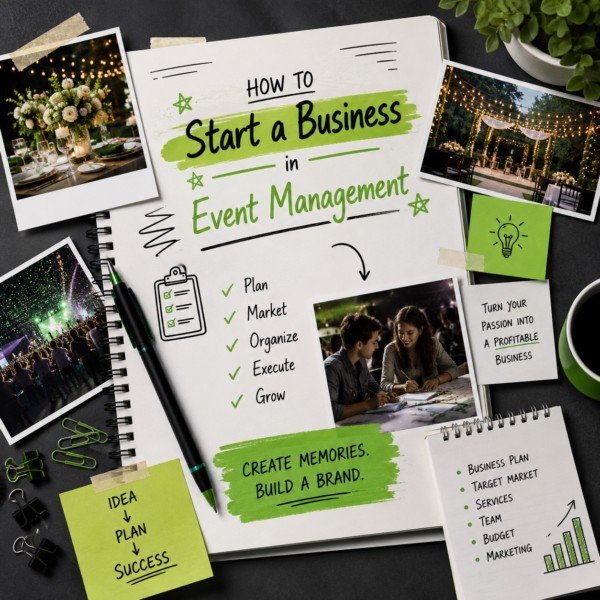
A solid event management business plan should cover:
- What you’re offering — full planning, day-of coordination, décor only, vendor tie-ups, or a mix
- Who you’re serving — brides and grooms, corporates, colleges, or a bit of everyone to begin with
- How you’ll price it — flat fee, percentage of the event budget, or a markup on vendor costs
- Who else is doing this in your city and what makes your approach different
- Money in, money out — what you’ll spend on marketing, tools, and travel, and what you need to earn to actually make this worthwhile
Writing this down forces you to think about the boring-but-important stuff before you’re in the middle of your first big event trying to figure it out on the fly. Think of your event management business plan less like a formal document and more like a map you keep going back to whenever you feel unsure about your next move.
Step 3: Handle the Legal and Financial Basics
This part isn’t exciting, but skip it and you’ll regret it later. At minimum, you’ll want to:
- Register your business under a name people can remember and trust
- Open a separate bank account so your personal and business money don’t get mixed up
- Look into whatever local licenses apply, especially if you’re dealing with catering, alcohol, or large public gatherings
- Get basic liability insurance once you start handling bigger events — it protects you if something goes wrong that isn’t your fault
None of this needs to happen on day one, but it should happen before you’re managing serious money for other people.
Step 4: Figure Out What It’ll Actually Cost You to Start
One of the good things about this line of work is that you don’t need a warehouse full of equipment to begin. Most of your early spending goes into things like a laptop, a decent phone, basic design or planning software, some marketing, and maybe transportation.
Depending on where you’re based and how big you want to start, your setup costs could be fairly modest. Some people literally start from their bedroom, taking on smaller events while working another job on the side, and slowly reinvest their earnings into growing the business. There’s no shame in starting small — most people do, and a lean event management business almost always beats an overspent one in the first year.
Step 5: Build Real Relationships With Vendors
This is where a lot of new planners underestimate how much work is involved. Your clients aren’t just paying for your time — they’re paying for your network. Caterers, decorators, photographers, sound and lighting teams, venues — you need people you can call at 11 PM the night before an event and actually trust to show up.
Start meeting these people early, even before you have paying clients. Visit venues. Talk to vendors. Ask about their rates, their availability, and how they handle last-minute changes. The stronger this network is, the fewer nightmares you’ll deal with once the bookings start coming in.
Step 6: Create a Portfolio, Even If You’re Starting From Zero
Here’s the part that scares most beginners the most: how do you convince someone to trust you when you don’t have any past events to show? Honestly, this is the exact question behind most searches for how to start event planning business advice — people aren’t asking about the theory, they’re asking how to get past this specific hurdle.
If you’re wondering how to start an event planning business with no experience, this is the answer — you create the experience yourself. Offer to plan a family member’s birthday for free or at a low cost. Help organize a small community event or a friend’s engagement. Volunteer at a local exhibition just to see how things run behind the scenes. Take photos of everything you do. Ask people for a quick testimonial afterward.
None of these need to be huge, glamorous events. A well-organized small gathering with good photos and one honest testimonial does more for your credibility than you’d expect. This is exactly how most planners get their first “official” client — by proving themselves on something small first.
Step 7: Get Visible
Once you have even a couple of examples of your work, it’s time to let people know you exist. You don’t need a massive marketing budget for this.
- Set up an Instagram page and post real photos from events you’ve worked on, not just stock images
- Ask happy clients to tag you or leave a short review
- Get active in local groups — colleges, community centers, small business associations — anywhere people organize events
- Build simple relationships with venues, since they often refer planners to people looking for one
Word of mouth is still the strongest form of marketing in this industry. One well-managed event can bring you three more bookings without you spending a rupee on ads.
Step 8: Land Your First Few Real Clients
Your first paying clients are usually the hardest to get and the most important. Don’t be afraid to offer a slightly discounted rate for your first couple of bookings in exchange for full creative freedom and permission to use photos for your portfolio. Most people are happy to agree to that.
Lean on your personal network first. Tell people directly that you’re now taking bookings. You’ll be surprised how often someone says “actually, my cousin’s getting married next month” the moment you mention it out loud.
The Challenges Nobody Warns You About
It’s worth being honest about this part too. Running an event company means odd hours — most of your actual events happen on weekends and evenings, while the planning happens during the week. Something will go wrong at almost every event, whether it’s a vendor running late or a client changing their mind two days before. Clients will sometimes have a bigger vision than their budget allows, and it’ll be on you to manage that conversation gracefully.
None of this means you shouldn’t do it. It just means you should go in with your eyes open, build backup plans for the things most likely to go wrong, and get comfortable with a bit of controlled chaos. That’s genuinely part of the job, and the planners who last in this field are the ones who stay calm when things don’t go exactly to script.
Bringing It All Together
Business event management isn’t reserved for people with fancy degrees or years of corporate experience. It’s built by people who are organized, who care about details, who aren’t afraid to start small, and who keep showing up even after a rough first event or two. Whether you’re aiming for weddings, corporate conferences, or something else entirely, the process stays roughly the same: get clear on your niche, plan properly, build real relationships, and prove yourself one event at a time.
If you’re serious about turning this into a long-term career and not just a side hustle, it also helps to invest in learning the fundamentals properly — budgeting, vendor negotiation, client handling, and event logistics — rather than picking everything up through trial and error alone. That’s exactly where structured learning from a place like Event University can save you years of learning the hard way.
And if you’re still asking yourself how to start an event planning business with no experience at this point, remember: nobody starts with a client list and a full portfolio. Every planner you admire today once had zero events behind their name. What separates the ones who make it is that they started anyway, learned from business event management on the job, and let each small win open the door to the next one.
Start where you are, take your first small event seriously, and let your reputation build from there. That’s really how almost everyone in this industry got their start.